Fluid and Electrolytes for NCLEX: Lab Values, Symptoms, ABGs, and Nursing Actions
Fluid and electrolyte questions test whether you can connect lab values, symptoms, medications, intake/output, daily weights, IV fluids, and patient safety — not just memorize numbers.
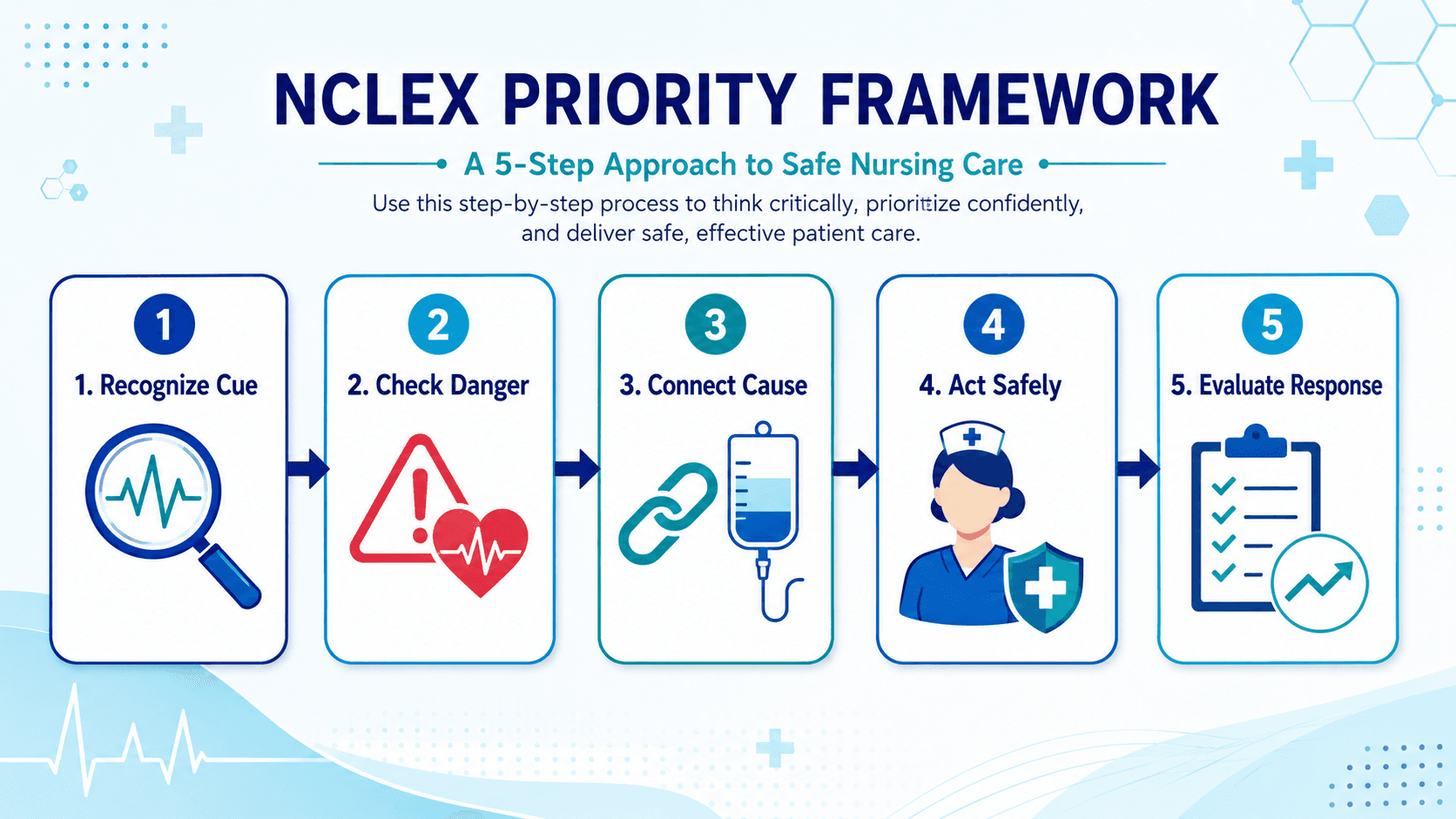
This topic is not just memorizing numbers. The exam usually wants to know:
- Which finding is most dangerous?
- Which lab value should be reported?
- Which patient should be assessed first?
- Which IV fluid is safest or unsafe?
- Which medication increases risk?
- What should the nurse monitor after an intervention?
- What trend shows the patient is improving or getting worse?
The safest approach is to interpret the lab in context: symptoms, trend, diagnosis, medications, renal function, ECG changes, and fluid status.
Fluid and Electrolytes at a Glance
Fluid and electrolyte imbalance is tested mainly through Physiological Adaptation and Reduction of Risk Potential. The NCLEX may test:
- Fluid volume deficit and excess
- Sodium, potassium, calcium, magnesium, phosphate, and chloride abnormalities
- Acid-base balance and ABG interpretation
- IV fluid selection and monitoring
- Lab trends and clinical deterioration
- Renal, cardiac, endocrine, GI, and postoperative complications
- Medication effects, especially diuretics and cardiac/renal medications
- NGN case studies with changing vital signs, labs, intake/output, and nursing notes
Reference-range note
About this guide
The NCLEX Decision Framework
Use this five-step method for fluid and electrolyte questions — it mirrors the same clinical judgment the exam measures.
1. Recognize the cue
Look for an abnormal lab value, a change from baseline, new confusion/weakness/seizure/lethargy, ECG changes, vomiting/diarrhea/sweating/NG suction, edema/crackles/dyspnea/sudden weight gain, poor skin turgor/dry membranes/thirst/low urine output, relevant disease (kidney, heart failure, adrenal, diabetes, burns, SIADH), and medication risk (diuretics, ACE inhibitors, ARBs, digoxin, insulin, lithium, magnesium products).
2. Check danger first
Ask: “Can this kill the patient quickly?” Highest-priority cues include:
- Potassium abnormality with ECG changes
- Severe sodium abnormality with seizure, confusion, or decreased level of consciousness
- Fluid overload with respiratory distress or crackles
- Dehydration with hypotension, tachycardia, or low urine output
- Calcium or magnesium abnormality with neuromuscular symptoms, respiratory depression, or dysrhythmias
- Acid-base imbalance with respiratory failure, shock, sepsis, DKA, or kidney failure
3. Connect the cause
Do not treat the lab as an isolated number. Ask: Is the patient losing or retaining fluid? Is the kidney unable to excrete the electrolyte? Is a medication causing it? Is this endocrine disease? Is there a GI loss (vomiting, diarrhea, NG suction)? Is there an IV-fluid or replacement problem?
4. Choose a safe nursing action
A safe answer often involves focused assessment, cardiac or respiratory monitoring, fall/seizure/aspiration precautions, strict intake/output, daily weights, holding or questioning an unsafe medication, implementing ordered therapy or protocol, notifying the provider/RN depending on role and urgency, and reassessing after the intervention. Avoid independent medication or fluid changes unless the question gives an order, protocol, or scope-safe action.
5. Evaluate response
After an intervention, ask whether symptoms improved, vital signs stabilized, urine output improved, lung sounds improved, the ECG improved, the lab is trending toward the expected range, and whether the patient developed any complication from treatment.
Common Adult Lab Values for NCLEX Study
| Lab | Common adult study range | Why it matters |
|---|---|---|
| Sodium | 135–145 mEq/L | Fluid balance, neurologic function, seizure risk |
| Potassium | 3.5–5.0 mEq/L | Cardiac rhythm, muscle function, digoxin safety |
| Total calcium | 9.0–10.5 mg/dL | Neuromuscular function, bones, cardiac rhythm |
| Magnesium | 1.3–2.1 mEq/L (about 1.8–2.6 mg/dL) | Neuromuscular function, reflexes, cardiac rhythm, potassium/calcium correction |
| Phosphate | 3.0–4.5 mg/dL | Bone, renal, and cellular energy balance |
| Chloride | 96–106 mEq/L | Fluid balance and acid-base balance |
| pH | 7.35–7.45 | Acidemia or alkalemia |
| PaCO₂ | 35–45 mmHg | Respiratory acid-base component |
| HCO₃ | 22–26 mEq/L | Metabolic acid-base component |
For a fuller reference, see our NCLEX lab values guide.
Treat the patient, not the number
Fluid Volume Deficit vs Fluid Volume Excess
Fluid status is core nursing monitoring — see nursing fundamentals for intake/output, daily weights, and assessment basics.
| Problem | Common cues | Common risks | Nursing priorities |
|---|---|---|---|
| Fluid volume deficit | Thirst, dry mucous membranes, poor skin turgor, tachycardia, hypotension, dizziness, concentrated urine, low urine output, weight loss | Shock, falls, acute kidney injury, electrolyte imbalance | Assess vitals, orthostatic symptoms, mucous membranes, urine output, mental status; maintain safety; monitor I/O and daily weight; give ordered fluids; evaluate response |
| Fluid volume excess | Edema, crackles, dyspnea, orthopnea, bounding pulse, hypertension, jugular venous distention, sudden weight gain, decreased oxygen saturation | Pulmonary edema, worsening heart failure, impaired gas exchange | Raise the head of the bed, assess respiratory status and lung sounds, monitor oxygenation, slow/stop the infusion if ordered or per policy, notify provider/RN, monitor I/O and daily weight |
High-yield point: Daily weight is one of the best indicators of fluid-balance trends. A sudden weight gain often indicates fluid retention.
Electrolyte Imbalances You Must Recognize
| Imbalance | Common causes | Key cues | Priority nursing focus |
|---|---|---|---|
| Hyponatremia | SIADH, excess water, diuretics, GI losses, hypotonic fluids | Headache, confusion, nausea, seizures, decreased level of consciousness | Neuro checks, seizure and fall precautions, fluid restriction if ordered, avoid rapid correction |
| Hypernatremia | Water loss, dehydration, fever, diabetes insipidus, inadequate intake | Thirst, dry mucous membranes, agitation, confusion, seizures | Fluid status, neuro checks, oral/IV water replacement as ordered, gradual correction |
| Hypokalemia | Loop/thiazide diuretics, vomiting, diarrhea, NG suction, poor intake | Weakness, fatigue, cramps, constipation, dysrhythmias, U waves | Cardiac monitoring if severe, medication review, digoxin toxicity risk, ordered potassium replacement, safe IV administration |
| Hyperkalemia | Kidney failure, missed dialysis, ACE inhibitors/ARBs, potassium-sparing diuretics, potassium supplements, tissue breakdown | Weakness, paresthesias, peaked T waves, widened QRS, dysrhythmias, cardiac arrest | Cardiac monitoring, immediate escalation for ECG changes, anticipate ordered calcium (membrane stabilization), insulin/glucose shift, and dialysis or binders for removal; avoid potassium intake |
| Hypocalcemia | Hypoparathyroidism, low vitamin D, pancreatitis, alkalosis, massive transfusion | Numbness/tingling, muscle cramps, tetany, seizures, positive Chvostek or Trousseau sign | Seizure precautions, airway risk if severe tetany/laryngospasm, ordered calcium replacement, monitor rhythm |
| Hypercalcemia | Malignancy, hyperparathyroidism, immobility, excess vitamin D/calcium | Weakness, constipation, polyuria, kidney stones, confusion, shortened QT | Hydration as ordered, fall precautions, monitor ECG, encourage mobility if appropriate, give ordered medications |
| Hypomagnesemia | Alcohol use disorder, malnutrition, diarrhea, diuretics, poor intake | Tremors, hyperreflexia, seizures, dysrhythmias, low potassium/calcium that may not correct | Seizure and cardiac monitoring if severe, ordered magnesium replacement, monitor potassium/calcium |
| Hypermagnesemia | Renal failure, excessive magnesium products, magnesium sulfate therapy | Hyporeflexia, weakness, hypotension, bradycardia, respiratory depression, cardiac arrest | Monitor reflexes, respiratory status, blood pressure, urine output; stop the magnesium source per order/policy and anticipate ordered calcium gluconate |
| Hypophosphatemia | Refeeding, alcohol use disorder, malnutrition, DKA treatment, antacids | Weakness, respiratory muscle weakness, confusion, impaired cardiac function | Monitor respiratory and muscle strength, replace as ordered |
| Hyperphosphatemia | Chronic kidney disease, tumor lysis, excessive intake | Often with hypocalcemia, muscle cramps, tetany, calcification risk | Give ordered phosphate binders with meals, renal-diet teaching, monitor calcium/phosphate |
Medication and Condition Triggers
Many fluid/electrolyte questions hinge on a medication or condition clue — review the pharmacology behind diuretics, potassium, digoxin, and renal medications.
| Trigger | Electrolyte risk | NCLEX clue |
|---|---|---|
| Loop diuretics | Low potassium, low magnesium, dehydration | Furosemide + weakness or dysrhythmia |
| Potassium-sparing diuretics | High potassium | Spironolactone + potassium supplement or renal disease |
| ACE inhibitors / ARBs | High potassium | Lisinopril/losartan + CKD |
| Digoxin | More dangerous with low potassium | Nausea, vision changes, dysrhythmia, hypokalemia |
| Vomiting / NG suction | Low potassium, metabolic alkalosis, fluid deficit | Weakness, alkalosis, low chloride |
| Diarrhea | Low potassium, metabolic acidosis, fluid deficit | Weakness, dehydration, low bicarbonate |
| Kidney failure | High potassium, high magnesium, high phosphate, fluid overload | Missed dialysis, ECG changes, crackles |
| SIADH | Dilutional hyponatremia | Low sodium, low serum osmolality, concentrated urine |
| Diabetes insipidus | Hypernatremia and dehydration | Excessive dilute urine, intense thirst |
| DKA treatment | Potassium shifts, acidosis correction | Potassium may drop during insulin therapy |
ABG Interpretation for NCLEX
Interpret ABGs systematically.
- Step 1 — pH: below 7.35 = acidemia; above 7.45 = alkalemia.
- Step 2 — PaCO₂: above 45 = respiratory acidosis tendency; below 35 = respiratory alkalosis tendency.
- Step 3 — HCO₃: below 22 = metabolic acidosis tendency; above 26 = metabolic alkalosis tendency.
- Step 4 — match the pattern using the table below.
| Disorder | pH | PaCO₂ | HCO₃ | Common NCLEX causes |
|---|---|---|---|---|
| Respiratory acidosis | Low | High | Normal or high if compensated | COPD, respiratory depression, opioid overdose, hypoventilation |
| Respiratory alkalosis | High | Low | Normal or low if compensated | Hyperventilation, anxiety, pain, fever, early sepsis, hypoxemia |
| Metabolic acidosis | Low | Normal or low if compensated | Low | DKA, renal failure, severe diarrhea, shock, lactic acidosis |
| Metabolic alkalosis | High | Normal or high if compensated | High | Vomiting, NG suction, diuretics, excess bicarbonate |
NCLEX trap: Compensation does not mean the original problem is gone. If the pH is still abnormal, the patient still has an acid-base imbalance.
IV Fluids and Safety Monitoring
IV-fluid selection is high-yield — see the IV therapy guide for access, rates, and complications.
| Fluid type | Examples | Moves water where? | Common use | Major risk |
|---|---|---|---|---|
| Isotonic | 0.9% sodium chloride, Lactated Ringer's | Expands extracellular/intravascular volume | Dehydration, shock, volume replacement | Fluid overload, especially in heart failure or kidney disease |
| Hypotonic | 0.45% sodium chloride; D5W after the dextrose is metabolized | Moves water into cells | Hypernatremia or cellular dehydration when ordered | Cerebral edema, worsening increased ICP, hypotension |
| Hypertonic | 3% sodium chloride; some dextrose/saline combinations are hyperosmolar in the bag | Pulls water into the intravascular space | Severe symptomatic hyponatremia or specific neuro/critical-care indications when ordered | Rapid sodium correction, fluid overload, pulmonary edema, vein irritation |
Hypertonic-fluid safety
How NGN Tests Fluid and Electrolytes
NGN fluid/electrolyte questions often give several tabs — vital signs, labs, intake/output, medications, nursing notes, and provider orders. Work the Next Generation NCLEX case-study method: recognize cues, analyze cues, prioritize hypotheses, generate solutions, take action, and evaluate outcomes. The same content appears across the full range of NCLEX question types:
| NGN item type | Fluid/electrolyte example |
|---|---|
| Trend | Identify worsening sodium, potassium, weight, urine output, or ABG pattern |
| Highlight | Select cues showing fluid overload or dehydration |
| Matrix | Mark findings as expected, concerning, or requiring immediate follow-up |
| Bow-tie | Match the main imbalance with nursing actions and monitoring outcomes |
| SATA | Select appropriate precautions, monitoring, or provider-notification findings |
| Case study | Track labs, medications, symptoms, and response to treatment across time |
Practice Fluid and Electrolyte Questions
Practice fluid and electrolyte questions with lab trends, ABGs, IV fluids, and NGN-style rationales that explain why unsafe distractors are wrong.
Start PracticingPractice Questions
Question 1 — Hyperkalemia with ECG changes
A client with chronic kidney disease missed dialysis and now reports weakness and palpitations. Potassium is 7.1 mEq/L. The ECG shows peaked T waves and a widened QRS complex.
Which action is the priority?
- A. Administer sodium polystyrene sulfonate as the only intervention
- B. Place the client on continuous cardiac monitoring and notify the provider/rapid response team immediately
- C. Encourage a high-fluid diet
- D. Wait for the next scheduled potassium level
Rationale: Severe hyperkalemia with ECG changes can lead to fatal dysrhythmias. The nurse should recognize this as urgent, use cardiac monitoring, escalate immediately, and anticipate ordered emergency therapy — calcium for cardiac membrane stabilization, insulin with glucose to shift potassium, and dialysis to remove it. A potassium binder is slow-acting and is not the priority as the only intervention in unstable hyperkalemia.
Question 2 — Hyponatremia with neurologic cues
A client with SIADH has sodium 122 mEq/L, confusion, headache, and nausea.
Which nursing action is most appropriate?
- A. Implement seizure precautions and follow the ordered fluid restriction
- B. Encourage free water intake
- C. Administer hypotonic IV fluids
- D. Place the client on a high-potassium diet
Rationale: SIADH causes water retention and dilutional hyponatremia. Neurologic changes increase seizure and fall risk. Fluid restriction may be ordered, and sodium correction must be monitored carefully to avoid rapid shifts.
Question 3 — Fluid volume excess
A client receiving IV fluids develops dyspnea, crackles, oxygen saturation of 89%, and new jugular venous distention.
What should the nurse do first?
- A. Increase the IV rate
- B. Place the client flat
- C. Raise the head of the bed and assess respiratory status
- D. Encourage oral fluids
Rationale: The client shows signs of fluid overload with impaired oxygenation. Raise the head of the bed, assess breathing, monitor oxygenation, and notify the provider/RN according to urgency and policy. The IV rate should not be increased.
Question 4 — Respiratory alkalosis
A postoperative client is anxious and breathing rapidly. ABG results: pH 7.50, PaCO₂ 28 mmHg, HCO₃ 24 mEq/L.
Which acid-base imbalance is present?
- A. Respiratory acidosis
- B. Respiratory alkalosis
- C. Metabolic acidosis
- D. Metabolic alkalosis
Rationale: The pH is high, indicating alkalemia. The PaCO₂ is low, showing the respiratory cause. The HCO₃ is normal.
Question 5 — Hypocalcemia
A client after thyroid surgery reports tingling around the mouth and fingers. The nurse notes muscle twitching.
Which action is most appropriate?
- A. Recognize possible hypocalcemia and notify the provider/RN promptly
- B. Encourage a low-calcium diet
- C. Document the finding as expected and take no action
- D. Administer phosphate replacement first
Rationale: Perioral tingling, twitching, and tetany after thyroid surgery suggest hypocalcemia, which can progress to seizures, laryngospasm, or dysrhythmias. The nurse should recognize the cue, maintain safety, and escalate promptly.
Common NCLEX Traps
Trap 1: Treating the number, not the patient
A mildly abnormal value in a stable client may need follow-up. A rapidly changing value with symptoms may be urgent.
Trap 2: Ignoring potassium and the ECG
Potassium abnormalities can cause life-threatening dysrhythmias. ECG changes make the situation urgent.
Trap 3: Correcting sodium too quickly
Rapid correction of chronic hyponatremia can cause serious neurologic injury. NCLEX often tests careful monitoring and avoiding rapid shifts.
Trap 4: Giving potassium unsafely
IV potassium is never given by IV push. Always dilute and infuse via pump, and follow rate, access, and monitoring policy.
Trap 5: Forgetting magnesium
Low magnesium can make low potassium or low calcium difficult to correct. High magnesium can depress reflexes, respirations, and cardiac function.
Trap 6: Documenting first during deterioration
Document after urgent safety actions are started. Do not document first when the client has respiratory distress, ECG changes, seizures, or shock signs.
Trap 7: Missing fluid overload during IV therapy
Crackles, dyspnea, falling oxygen saturation, edema, and sudden weight gain are not minor findings during IV-fluid therapy.
Practice Fluid and Electrolytes With RN Test Pro
Fluid and electrolyte questions improve when you practice the reasoning pattern:
- Recognize the dangerous cue
- Connect lab values with symptoms
- Compare current data with baseline
- Identify medication and disease triggers
- Choose safe nursing actions
- Evaluate the patient’s response
RN Test Pro helps you practice fluid/electrolyte imbalances, ABGs, IV fluids, lab trends, and NGN-style case studies with rationales that explain why unsafe distractors are wrong. Turn your review into a schedule with an NCLEX study plan.
Frequently Asked Questions
What electrolyte is most important for NCLEX?
Potassium is one of the highest-priority electrolytes because abnormal potassium can cause life-threatening dysrhythmias. Severe sodium, calcium, and magnesium abnormalities can also be emergencies depending on symptoms and severity.
What potassium level should be reported?
Use the lab's reference range and the clinical scenario. Potassium above the normal range — especially above about 5.5 mEq/L, or with ECG changes, kidney disease, or potassium-raising medications — requires prompt follow-up. Severe hyperkalemia with ECG changes is an emergency.
What are the main signs of hyponatremia?
Common signs include headache, nausea, confusion, weakness, seizures, and decreased level of consciousness. Neurologic changes are the major concern.
What are the main signs of hypernatremia?
Common signs include thirst, dry mucous membranes, agitation, confusion, neuromuscular irritability, seizures, and signs of dehydration.
How do I remember calcium imbalance?
Low calcium increases neuromuscular excitability: tingling, cramps, tetany, seizures, and positive Chvostek and Trousseau signs. High calcium slows things down: weakness, constipation, kidney stones, confusion, and decreased reflexes.
What IV fluid should be avoided with increased ICP?
Hypotonic fluids are generally avoided because they can move water into cells and worsen cerebral edema. Follow the provider order and facility policy.
What is the fastest way to interpret ABGs?
Check pH first, then PaCO₂, then HCO₃. Match the abnormal value that explains the pH. Respiratory problems move with PaCO₂; metabolic problems move with HCO₃.
Do I need to memorize every electrolyte value?
No. Learn common adult study ranges for high-yield electrolytes, but practice interpreting them in context. NCLEX rewards safe clinical judgment, not isolated number memorization.
Build Lab and Electrolyte Confidence the Way NCLEX Tests It
Practice fluid/electrolyte, ABG, and IV-fluid questions with lab trends and clinical-judgment rationales, and track your weak areas.
Get Started FreeRelated Topics
Physiological Adaptation
Where fluid/electrolyte imbalance lives in the blueprint.
IV Therapy
IV-fluid types, access, rates, and complications.
Pharmacology Review
Diuretics, potassium, digoxin, and renal medications.
NCLEX Lab Values
The high-yield lab values every student should know.
Clinical Judgment (CJMM)
The reasoning model behind NGN trend questions.
Nursing Fundamentals
Intake/output, daily weights, and assessment basics.